Hi everyone!

Summertime will be here before we know it and I’m already seeing both nannies and families start to schedule child care for the summer.

For many families, finding summertime child care can be a STRUGGLE because there is so much competition for available nannies. Check out my top 10 tips for how to find a summertime nanny!

Click Here To Watch The Video

summertime nanny


In today’s video, “Top 10 Tips to Find A Summertime Nanny”, I discuss my top suggestions to find a summertime nanny to ensure you and your family aren’t left scrambling as summer kicks off!

I go over:

– When to start your search

– Decide how much you can afford

– Consider working with a college student

– Why a nanny share might be the best solution

…. and six other great tips that will help you find that dream summertime nanny!

The MOST important tip that I can share with you is to start your search now (late April/early May) if you plan to hire a nanny in June.

Thinking about turning your babysitting experience into a full-time nanny career? Making the jump from occasional sitter to professional nanny is very achievable — it mostly comes down to presenting your experience well and taking a few intentional steps to build credibility.

Below are nine practical tips to help you transition from babysitter (or mother’s helper, camp counselor, or daycare worker) into a nanny role.

1. Ask for letters of recommendation

Letters of recommendation are especially valuable when you’re landing your first nanny position. They give you credibility while your formal nanny experience is still on the lighter side, so ask the families you’ve babysat or worked for whether they’d be willing to write one.

2. Have a strong, childcare-focused resume

A well-written resume is essential. Make sure yours highlights your caregiving experience and your strengths as a candidate.

3. Summarize your babysitting experience on your resume

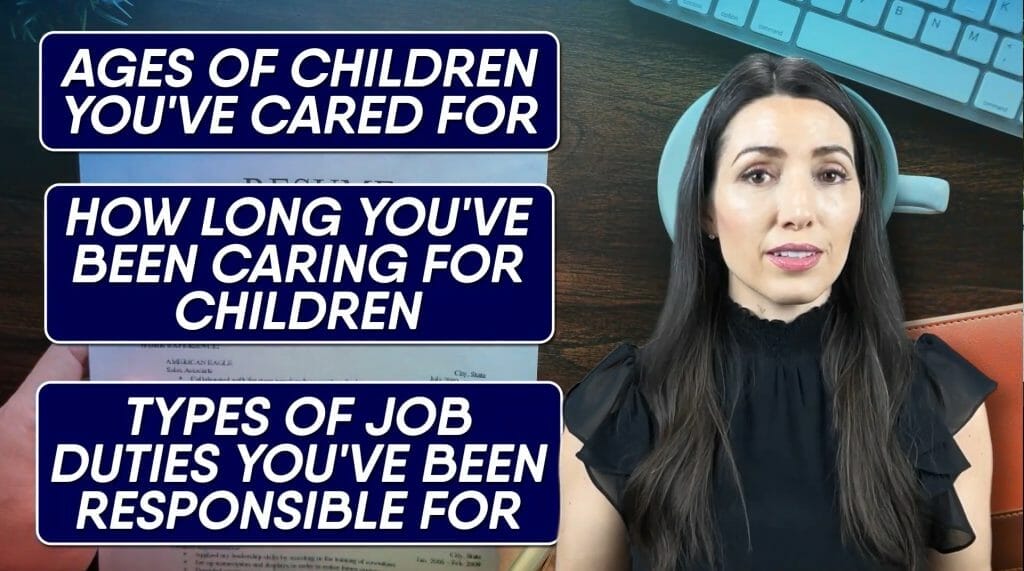
Include the number of children and their ages, along with the duties you were responsible for. If you babysat for several families, you can summarize that experience together — for example: “Cared for children ages six months to 13, up to three at a time, with responsibilities including…” and then list them out.

4. Give recurring roles their own entry

Any babysitting or mother’s helper role that was regular and recurring deserves its own separate entry on your resume. For example: “Smith Family After-School Babysitter, September 2020–present. Children ages five and seven. Provided regular after-school care including school pickups, snacks, homework help, and planned indoor/outdoor activities; provided full-day care Monday–Friday during the summer months.”

5. Play up your strengths

Highlight anything that sets you apart: volunteer experience, school clubs or activities, musical talents, or skills such as leadership, organization, and attention to detail, plus any relevant areas of study or interest.

6. Consider a mother’s helper role as a stepping stone

A mother’s helper position is a great transitional role between babysitting and nannying. In this role you provide care while a parent is home — giving them an extra set of hands, or freeing them up to work in another room or run a quick errand. You may take on more responsibility than a babysitter, sometimes including light household tasks like laundry or organization.

7. Advertise that you’re looking for a mother’s helper or nanny position

Let people know you’re available. Local childcare communities — like Nanny Parent Connection if you’re in the Seattle area — are a great place to start, along with social platforms such as Facebook or Nextdoor. Also reach out to families you’ve babysat for: they may need more help, or know a friend or neighbor who does. And don’t forget to add any mother’s helper experience to your resume — it absolutely counts.

8. Use your experience to apply for daycare or preschool assistant roles

Babysitting and mother’s helper experience can help you land a daycare or preschool assistant position, which looks great on a nanny resume. This type of work shows you can multitask and care for multiple children at once — valuable for nanny shares or families with several children — and it demonstrates reliability, follow-through, and teamwork. Note that some of these roles may require additional child-development training or a background check.

9. Take additional nanny or childcare training courses

Investing in training shows prospective employers you’re serious about becoming a nanny. Good options include the International Nanny Association and the U.S. Nanny Association, or simply search for “nanny classes” near you. Beyond nanny-specific courses, consider training in water safety, child development, positive discipline, special-needs care, child nutrition, or cooking.

Transitioning from babysitter to nanny is all about presenting your experience with confidence and continuing to build your skills. Follow these nine steps and you’ll be well on your way to landing a great nanny position.

If you’re not already part of our community, we’d love to have you. Nannies can join completely free, and Family/Parent memberships start at just $8.99/month.

Click Here To Join Today!

Hi everyone!

Welcome back to my video series, “From Babysitter to Nanny”. Recently, I have been hearing from so many people who are looking to break into the nanny world. In this series, I will walk you through a tutorial I’ve built for how to get started as a nanny.

Is this series for you? If you are looking to get into the nanny world and either a) don’t have any childcare experience or b) are currently working as a sitter, part-time camp counselor, or daycare worker and need guidance on next steps, this series has you covered!

In Episode #1, I covered my eight steps to becoming a babysitter which is a great place to start gaining experience. I discussed training through babysitter classes to how to find babysitting gigs all the way through setting up a digital business card and online payments to make it easier for parents to pay you for babysitting.

Click Here To Watch Episode #2

Ten Things Parents Want In A Babysitter

In Episode #2, “Ten Things Parents Want In A Babysitter – From Babysitter to Nanny Series – Ep. 2”, we continue the tutorial with my top ten suggestions for what parents are looking for from a sitter. I cover…

– First Aid/CPR certification

– Meal prep experience

– Activity bins

– Communication with families

….and many other tips that will give you an advantage as you begin to offer your sitter services. Click here to watch the episode.

Pro Tip: Send a brief text message a few hours after your sitting gig ends to let the parents know that you appreciate their business and enjoyed your time with their kids. This is a surefire way to get hired by that family again!


Hi everyone!

In the last couple of months, we have noticed a huge uptick in the number of people deciding to enter the nanny world. Many of these people are looking to switch careers and do something more rewarding than their current job. Some are daycare employees or camp counselors who are looking to earn a higher hourly rate.

But how to get started? I’ve got you covered with my latest series, “From Babysitter to Nanny”! In this series, I will walk you through a tutorial I’ve built for how to get started as a nanny.

First, if you don’t have any childcare experience (or maybe just light experience watching a family member’s child or working part-time at a camp), you will need to get some experience under your belt. I recommend starting out with babysitting as you can gather experience and begin to better explore and understand the sitter/nanny childcare world.

Let’s get started with “How To Become A Babysitter – From Babysitter to Nanny Series – Ep. 1“. I got my start in the childcare world by becoming a babysitter at 12 years old. I fumbled around for a few months trying to figure out how best to gain experience and find parents to hire me. It was a struggle!

Click Here To Watch Episode #1

How To Become A Babysitter

In today’s video, I cover my eight steps to becoming a babysitter. I discuss training through babysitter classes on how to find babysitting gigs all the way through setting up a digital business card and online payments to make it easier for parents to pay you for babysitting (I wish I had these tips when I was first getting started!)

Pro Tip: Start with pre-school-aged and older children. Most kids these ages are potty-trained (yeah for no diapers!) and can communicate. These age groups are easier to start with.


Hi everyone!

With the federal tax filing deadline just a few days away, don’t miss out on these money-saving tax breaks if you worked with a nanny in 2021 or are currently with a nanny in 2022!

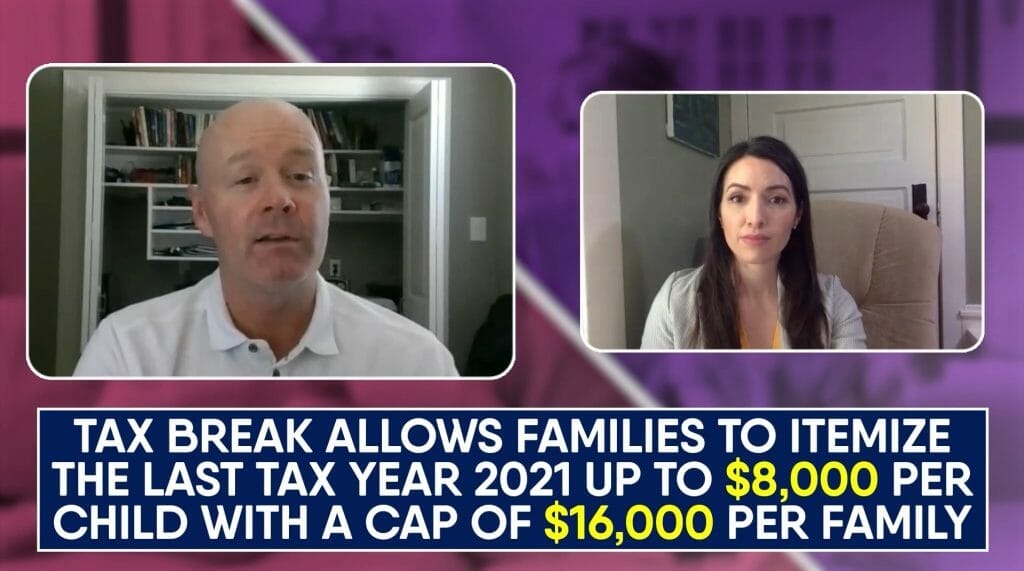
In today’s video, “Watch This Before Filing Your Taxes! Nanny Tax Breaks (2021 and 2022)”, I sit down with Tom Breedlove, Senior Director of Homepay to discuss how your family can save money on your 2021 taxes and what changes might affect you for the 2022 tax year.

We discuss:

– Child Tax Credit

– Child Care Tax Credit

– Build Back Better Act

– Dependent Care Flexible Spending Account (FSA)

– Who qualifies for these tax breaks

Did you know you can get a tax break if your kids attend summer camp (i.e. sports, Lego, Minecraft camps)? I didn’t and this video helped my family save money on our 2021 taxes!

I learned about several new tax breaks while producing this video and hope that you do too.

If you would like to talk to the HomePay team or sign up for their highly rated payroll services, click here. Sign up today and your first month is FREE!

Nannies – the HomePay team can answer any questions that you have as well.

Click Here To Watch!


There may come a time when you have to part ways with your nanny. It may be because your kids are heading to daycare, the contract with your nanny is almost over, or things are just not working out for your family, your nanny, or maybe for both of you!

Parting ways with your nanny can be difficult for everyone. Many nannies and parents experience feelings of anger, frustration, confusion, and disappointment during the process. The kids can sometimes feel that it was their fault.

In my latest video, “How To Part Ways With Your Nanny (My Eight Tips) – Working With A Nanny From A-Z Series – Ep.15”, I discuss how to part ways with your nanny (or with your family if you are a nanny) in a way to prevent some of these negative feelings I mentioned above.

New to our “Working With A Nanny From A-Z” videos? In this series, I am going to walk you through the entire process of working with a nanny. From deciding if nanny care is right for your family all the way through how to find, interview, hire and work with a nanny. Basically, everything you need to know from A-Z about the nanny world!

If you missed any of the first fourteen episodes, click the images below to check those out:

In today’s video, I go over my eight top tips for how to end the relationship, tie up loose ends, and (hopefully) maintain some sort of relationship with your nanny moving forward. Most importantly, never hold back payment from your nanny due to a conflict. It can quickly lead to legal action and paying some seriously large fees to attorneys!


Click Here To Watch!


Hi nannies! Are you concerned that you aren’t being paid appropriately? Worried that your family isn’t following legal labor standards (i.e. paying overtime)? Are more and more job duties being piled on you by the parents?

If so, it’s time for an Annual Review!

Today, I am excited to release my latest video which I call my “Annual Review Tutorial for Nannies“.

In this video, I cover why an annual review is important, how to request a review (if your nanny family hasn’t), how to provide and receive feedback, how to discuss job duty “creep” and how to ask for a raise.

Don’t forget that an annual review is important no matter how you are being paid (over the table vs. under the table in cash).

I used these tips when I was a nanny and found that the annual review process became much less scary and created a stronger bond between the parents and myself. I hope you find these tips useful as well!

Click Here To Watch!


Parents – are you sitting down with your nanny on an annual or quarterly basis to compare notes on how the relationship is going?

If not, make sure that you do! One of the keys to a strong, long-lasting relationship with your nanny is communication – what’s working, what’s not working, and what does the future look like for both your family AND your nanny.

I’m back with Episode #14 in our series, “Working With A Nanny From A-Z”. In today’s episode, I discuss why annual reviews are important and how best to approach them!

New to our “Working With A Nanny From A-Z” videos? In this series, I am going to walk you through the entire process of working with a nanny. From deciding if nanny care is right for your family all the way through how to find, interview, hire and work with a nanny. Basically, everything you need to know from A-Z about the nanny world!

If you missed any of the first thirteen episodes, click the images below to check those out:

In today’s video, “The Annual Review (My Top Seven Tips) – Working With A Nanny From A-Z Series – Ep.14” I discuss my top tips for how to conduct an annual review so that both you and your nanny walk away feeling clear and positive about the status of your relationship. Click here to watch the episode.

Don’t forget to pay your nanny for the time it takes to conduct the annual review!


Hi everyone. Happy almost spring!

It’s Laura back with Episode #12 in our series, “Working With A Nanny From A-Z”. In today’s episode, I discuss ten conversations you should have with your newly hired nanny during the first week of working with your family!

Why have these conversations the first week? Because, if these topics aren’t covered early in the working relationship, they can get weird and awkward.

A good example is “saliva sharing”….are you okay with your nanny sharing a spoon or fork with your child? Or kissing your child? Most parents are not and it can feel a bit awkward to bring it up. That’s why you should discuss it before it gets weird!

New to our “Working With A Nanny From A-Z” videos? In this series, I am going to walk you through the entire process of working with a nanny. From deciding if nanny care is right for your family all the way through how to find, interview, hire and work with a nanny. Basically, everything you need to know from A-Z about the nanny world!

If you missed any of the first eleven episodes, click the images below to check those out:

In today’s episode, “The First Week: 10 Conversations You Need To Have – Working With A Nanny From A-Z”, I discuss topics that you should cover with your nanny during their first week on the job such as:

  • Food in your home. What can the nanny eat or not eat?
  • Cell phone use. What’s okay and not okay?
  • Meal and rest breaks. How will your nanny handle taking breaks during the day?
  • Inclement weather policy. What happens if there is a snowstorm or flooding?


Hi friends! It’s Laura back with Episode #13 in our series, “Working With A Nanny From A-Z”. In today’s episode, I discuss how to handle problems with your nanny.

A common message I receive from parents:

“Hey Laura, I need some advice as I am not sure how to handle this issue. I’m noticing that….”

Sitting down with your nanny to address a problem can feel awkward and uncomfortable for many parents. If you aren’t sure how to sit down and discuss an issue with your nanny, don’t stress….you’re not alone!

Click here to watch Episode #13 and check out my tips!

New to our “Working With A Nanny From A-Z” videos? In this series, I am going to walk you through the entire process of working with a nanny. From deciding if nanny care is right for your family all the way through how to find, interview, hire and work with a nanny. Basically, everything you need to know from A-Z about the nanny world!

If you missed any of the first twelve episodes, click the images below to check those out:

In today’s video, I discuss the common problems that I hear from parents and go over my five top tips for handling an issue with your nanny so that both the parent and nanny feel heard and there are no hurt feelings.

Nannies – what tips do you have for other nannies that might be experiencing a problem with their nanny family? I’d love to hear from you. Simply comment below!